
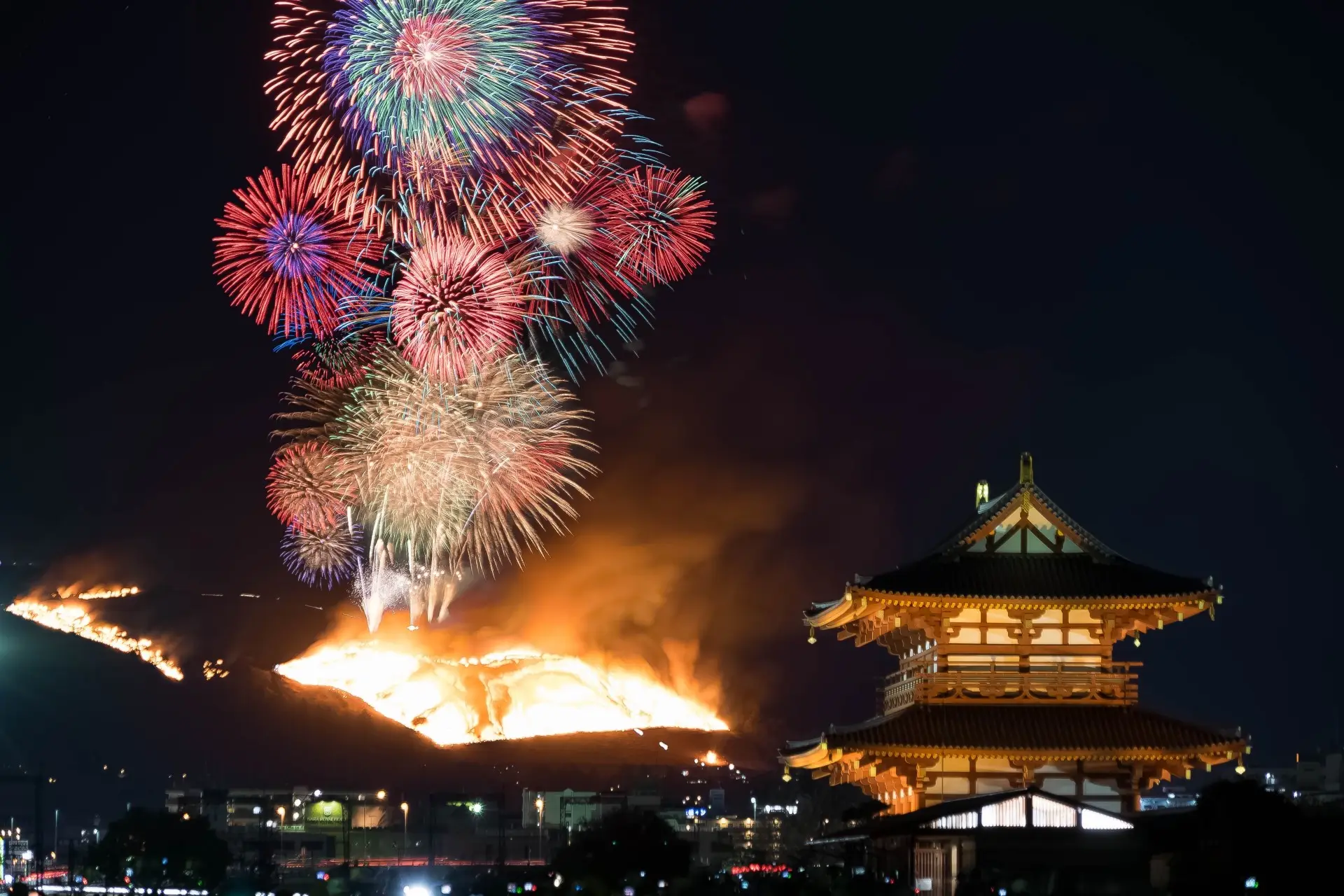
- Dates & time
- January 23, 2027 (Sat) 17:00 to around 19:30 (fireworks 18:15, burning from 18:30)
- Price & booking
- Free to watch from the lawns of Nara Park (Kasugano Park, Ukigumo Park and others). The Foothill Paid Viewing Area and the Nara Park Bus Terminal rooftop area require a ticket (prices to be announced on the official site in early November). No booking is needed for the free areas. Paid viewing tickets go on sale in mid-November, with sales details announced in early November on the official ticket page.
- Venue & access
- Mount Wakakusa and Nara Park About a 20-minute walk east from Kintetsu Nara Station (to the Nara Kasugano International Forum). From JR Nara Station, take the city loop bus (outer route) to Todaiji Daibutsuden / Kasuga Taisha-mae, then walk about 5 minutes.
There are 1 car parks within a 12-minute walk of Mount Wakakusa and Nara Park, and 4 public restrooms within 8 minutes. The map shows each with its walking time.
Facility data comes from OpenStreetMap. It does not include opening hours, fees or availability.
Why You Should Visit
On one winter night each year, the grass slopes of Mount Wakakusa on the east side of Nara Park are set alight. A grand fireworks display, including large shakudama shells, opens at 18:15, and at 18:30 the local fire brigades light the hillside all at once, leaving the whole slope burning until around 19:30. Earlier in the evening a sacred fire procession carries the flame from the Kasuga Taisha Otondo bonfire across Tobihino to Nogami Shrine. You can watch for free from the open lawns of Nara Park such as Kasugano Park, and there is also a paid viewing area at the foot of the mountain.
Why is Mount Wakakusa burned?
Mount Wakakusa has an ancient burial mound, Uguisuzuka Kofun, near its summit, and the burning is said to have begun as a way to calm the spirits resting there. By the Edo period people were setting the hill alight on their own, and after fires spread toward Todai-ji, the temples Todai-ji and Kofuku-ji began burning it under the watch of the Nara magistrate. Today the shrine Kasuga Taisha and the two temples still take part together, praying for the souls of those who came before, for protection of Nara from fire, and for peace. Mountain priests (yamabushi) blowing conch shells lead the torch procession, and the torches are lit as the three temples' monks chant.
Programs
Timetable & Map
NOTE
Weather:
- Held in light rain or light snow. May be cancelled for heavy rain, heavy snow, strong wind or a forest fire warning
- The decision is posted on the official site by 10:00 on the day. There is no postponement
On the day:
- The summit of Mount Wakakusa is closed on foot and by car
- Traffic restrictions around the area from about 15:00 to 20:00, with some roads closed even to buses and taxis from about 18:00 to 19:30
- There is no dedicated parking
Earlier the same day:
- The Kasuga Taisha Otondo bonfire burns on Tobihino in the afternoon, and its flame lights the procession torches
No temporary toilets are set up for the event.
出典: 若草山焼き行事 公式サイト

Events
Where to go next

1/23
Kasuga Taisha Otondo Bonfire
Tobihino Field, Kasuga Taisha Shrine grounds

11/3
Heijokyo Tenpyo Procession to Todai-ji 2026
JR Nara Station – Sanjo-dori – Todai-ji – Kasugano Enchi (Nara Park)

11/7 - 11/8
Nara Deer Antler Cutting Ceremony (Shika no Tsunokiri)
Rokuen deer enclosure antler-cutting arena, Kasuga Taisha grounds (Nara Park)

11/15
Gyoki-san Grand Thanksgiving Festival
Tobihino Field in the Kasuga Taisha Shrine grounds and other venues

Next 10/31 +4 more
Autumn Night Nara: Five World Heritage Sites After Dark
Kasuga Taisha, Kofukuji, Gangoji, Toshodaiji and Yakushiji
Next 11/7 +9 more
Kobe Port Weekend Fireworks 2026–27 | Weekend Fireworks off Meriken Park
Meriken Park
Next 10/31 +8 more
EAT LOCAL KOBE Farmers Market
Suma Beach, south of JR Suma Station, Suma-ku, Kobe

10/10 - 11/30
Moomin × Kobe Port Tower: a part of KOBE
Kobe Port Tower and 20+ locations across Kobe