Every travel guide in the world will send you to Mouriya or Steakland in order to eat Kobe beef. And honestly? They're not wrong — those places are good. But if you want to eat the way Kobe people actually eat when they're treating themselves to wagyu, you need a different shortlist.
Here are two spots that don't show up on the first page of tourist results — but should.
Quick Comparison
| Kobe Nikuryori Sugitani | Yakiniku Dojo Tecchan | |
|---|---|---|
| Style | Omakase course, 10 dishes | Yakiniku (grill-it-yourself) |
| Beef | Kobe beef only | Black wagyu from across Japan, incl. Hyogo |
| Budget | ¥15,000 per person (tax included) | Order à la carte |
| Seats | 7 counter seats | Tables, solo-friendly |
| Booking | Opens on the 15th for next month | Tabelog (English available) |
| Best for | A special-occasion Kobe beef meal | A relaxed wagyu dinner with locals |
What Counts as Kobe Beef
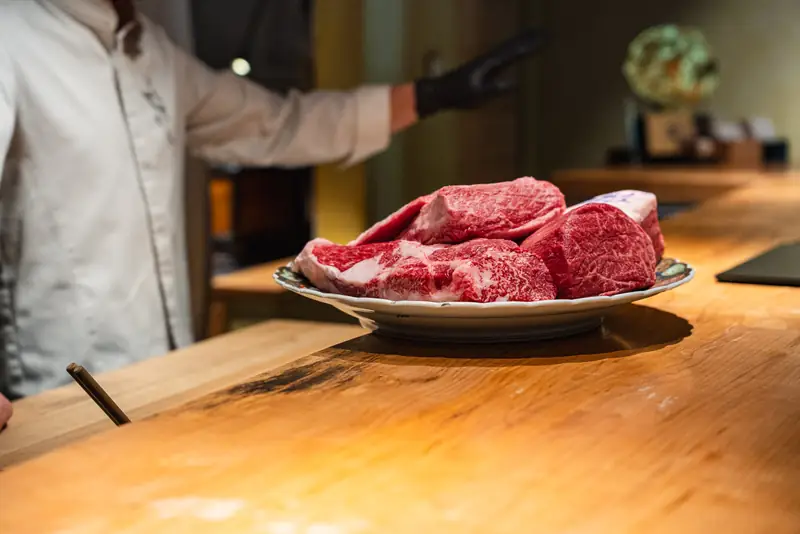
Kobe beef is a certified brand, not a general word for Japanese beef. It must come from Tajima cattle born and raised in Hyogo Prefecture and pass grading standards set by the Kobe Beef Marketing & Distribution Promotion Association, including a marbling score (BMS) of 6 or higher. Plenty of excellent wagyu in Kobe is not Kobe beef — Tecchan below is a good example. The association's definition page has the full criteria.
Kobe Nikuryori Sugitani — An Omakase Built for Kobe Locals, Not Tourists
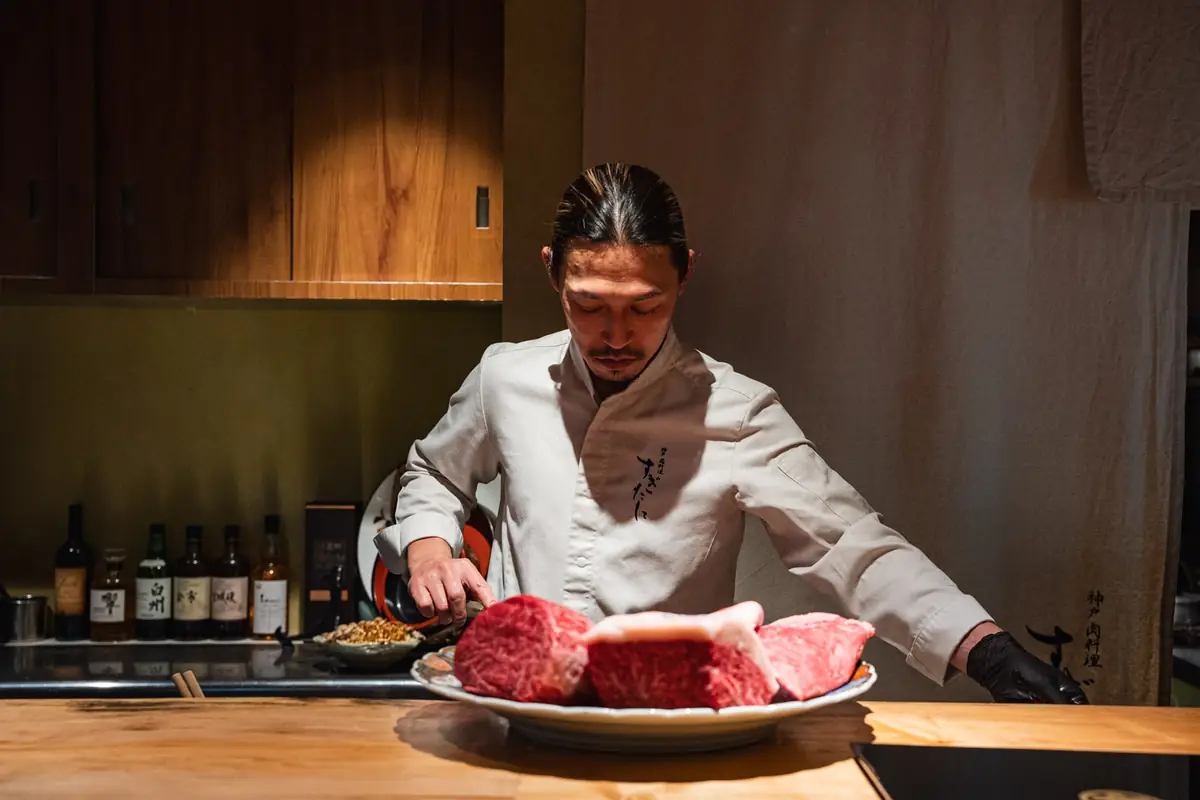
Sugitani started with a simple but quietly radical idea: Kobe beef is produced here, but most Kobe residents never eat it. It's "close but far" — a luxury ingredient that exists in your city but feels inaccessible. The restaurant was built to fix that.
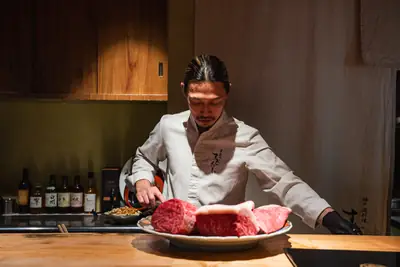
Seven counter seats. One omakase course. A chef who trained across multiple cuisines — Japanese, Western, and everything between — before deciding that the best way to celebrate Kobe beef was to cook it without a formula. The season, the cut, his own instincts: these drive the menu.
What sets Sugitani apart from the typical Kobe beef experience isn't just the beef. It's the restraint. Every dish is designed so the protein doesn't overwhelm you. By the time you reach the last course, you're satisfied but not heavy — a detail that sounds obvious until you've eaten at enough high-end steak restaurants to know how rarely they get it right.
The Course (¥15,000, tax included)
Ten dishes. Around two hours. No decisions required once you sit down.
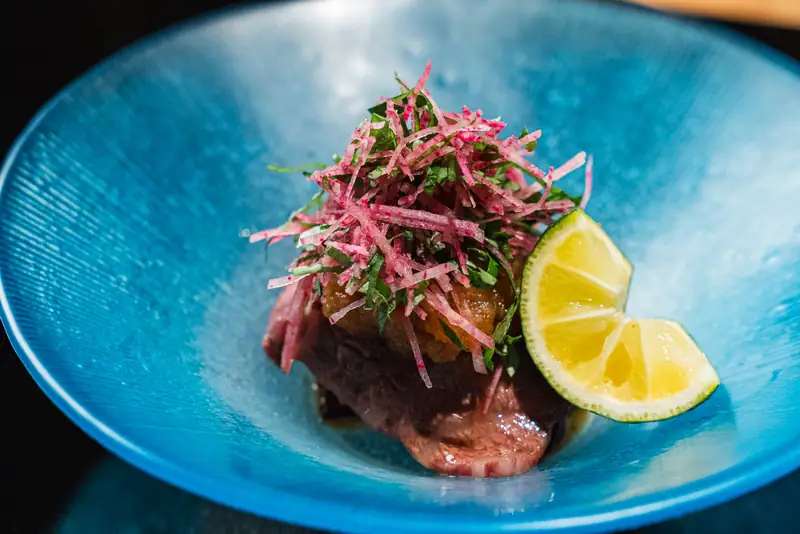
Seared Kobe beef, house-made ponzu, cold starter — The opening sets the tone: clean, precise, the beef doing most of the talking with just enough acid to frame it.
Egg white soup with bonito-kombu dashi, snow crab — A palate reset between beef dishes. Delicate, almost weightless.
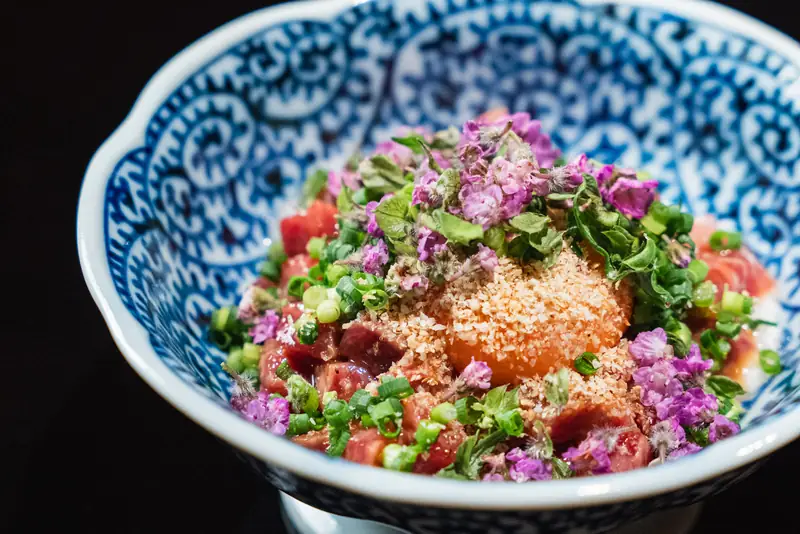
Kobe beef yukke-style, egg yolk and grated yam — Raw, seasoned, umami-forward. A cut chosen for texture as much as flavour. The yam softens the richness just enough.
Kobe beef tendon and burdock spring roll, cheese and bottarga — This is where the chef's range shows. Braised tendon inside a crispy shell, with the funk of bottarga and the salt of cheese. Unexpectedly addictive.
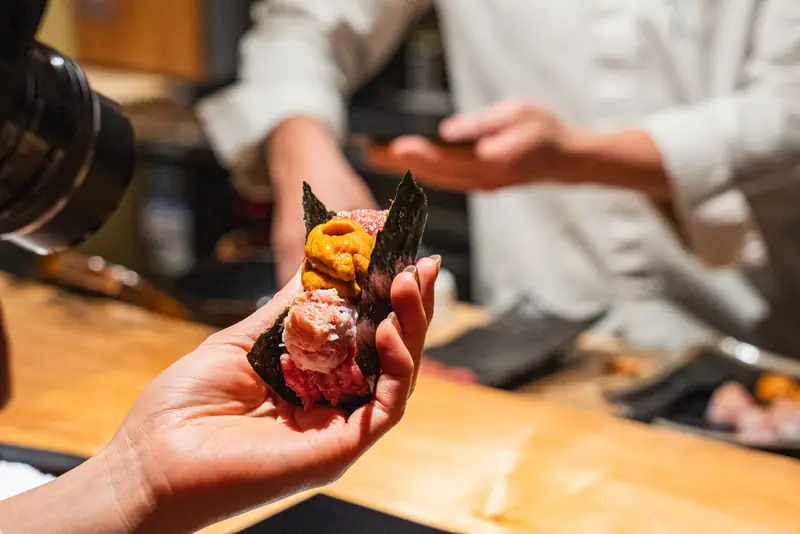
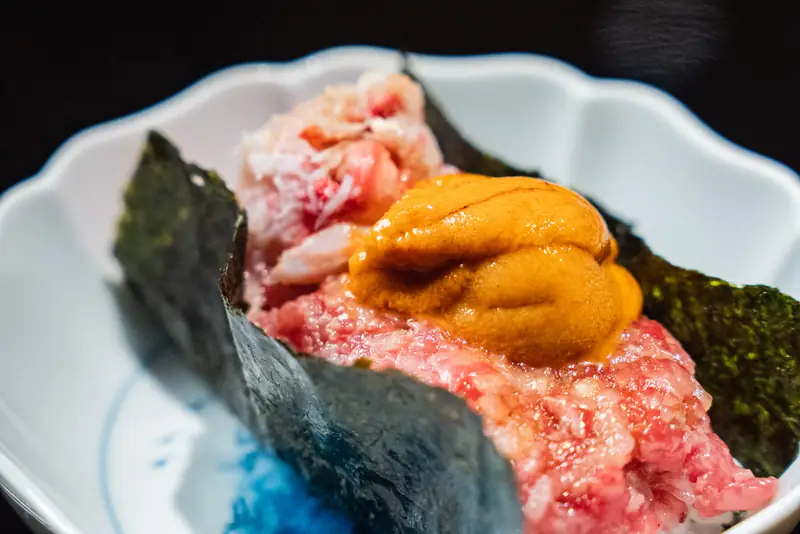
Hand roll: sea urchin, Kobe beef, crab — Mountain meets sea in one bite. Sweet uni, fatty beef, sweet crab. One of those combinations that shouldn't need to exist but absolutely does.
Kobe beef hot pot, seasonal mushrooms, miso broth — The one hot dish before the finish. First-press bonito and kombu dashi, dipped in house-made ponzu. The chef says happiness is what happens in your mouth at this point. He's not wrong.
Chawanmushi, first-press bonito dashi, snow crab — Silky steamed egg with crab. A brief, clean interlude.
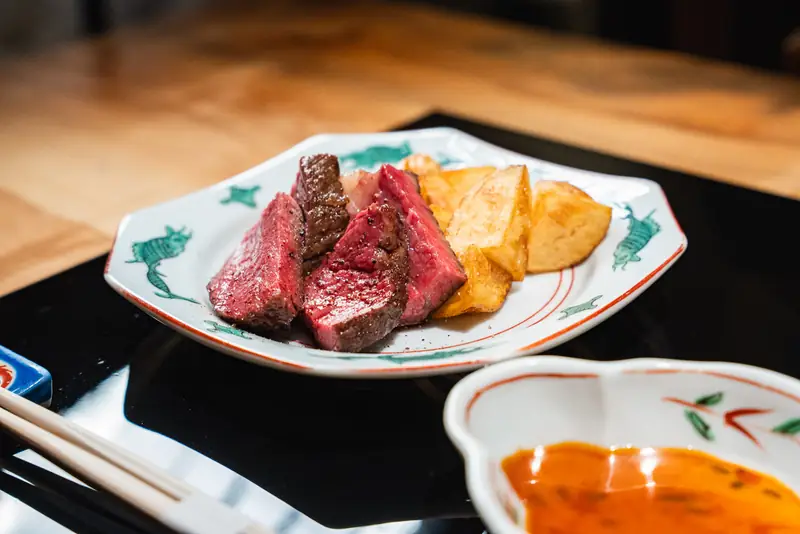
Grilled Kobe beef, baked potato — Charcoal-grilled, unhurried. Served with a house-made tare. The most straightforward dish on the menu, and somehow the most satisfying.
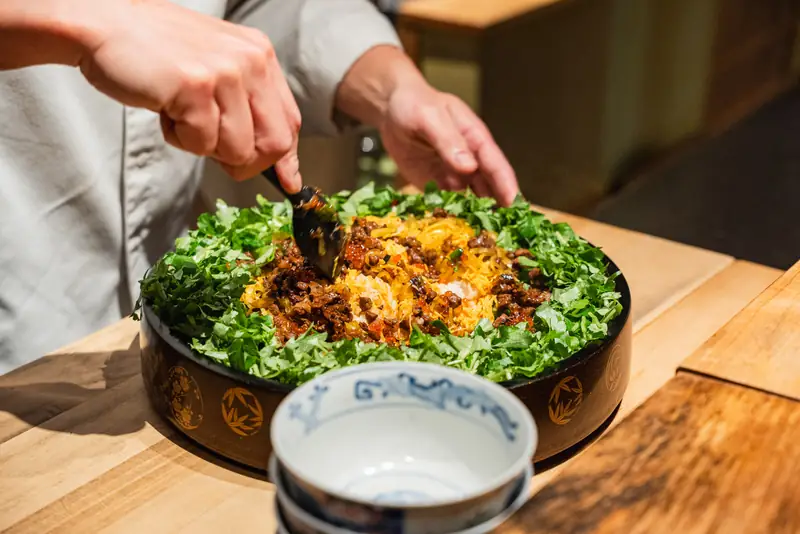
Kobe beef scattered sushi, pickles and miso soup — The finale. Charcoal-grilled Kobe beef and ikura over sushi rice, served in tableware dating back to the Edo period (circa 180 years old). The visual alone is worth photographing.
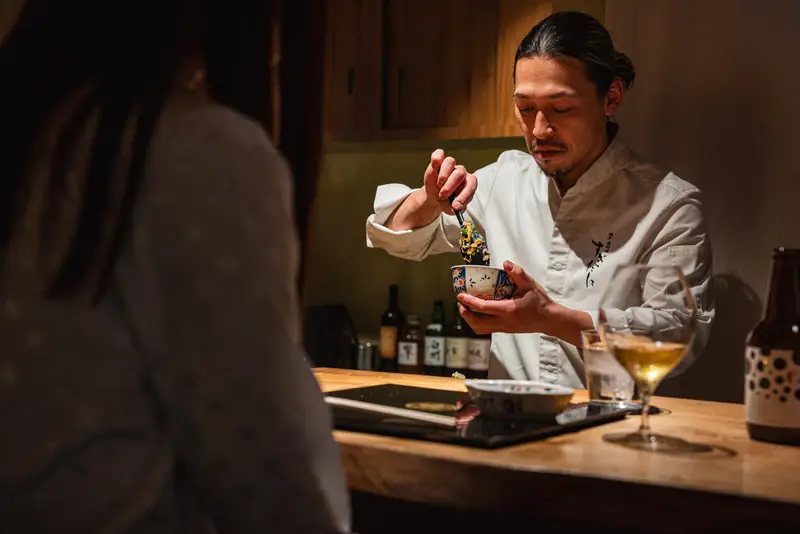
Seasonal fruit — Simple, clean, done.
The Feel
There's a live quality to dining here that's rare. Seven seats means the chef is right in front of you the entire time. You'll watch every dish being assembled. You'll probably end up talking — about the beef, about the course, about what you're eating. Counter-only, intimate, special occasion energy. Not formal in a stiff way. More like eating at someone's very talented friend's place.
Practical info:
- 📍 3-4-8 Kumoidori, Chuo Ward, Kobe — 5-min walk from JR Sannomiya / Hanshin Sannomiya
- Mon/Wed/Fri: 19:00 start · Tue/Thu: 18:00 start · Sat & holidays: 17:30 or 20:00 start
- Closed Sundays
- Counter seats only, 7 seats total
- Budget: ¥15,000 per person (tax included)
- Reservations open on the 15th of each month for the following month — book fast
- Reserve via TableCheck or Tabelog
Yakiniku Dojo Tecchan — Where Champions Come to Eat

There's a phrase on Tecchan's Instagram that says everything you need to know: "the yakiniku restaurant other yakiniku chefs come to eat at." That's not marketing fluff. It's the kind of reputation that takes years of obsessive sourcing and cooking to build.
But there's another way to put it. This is the restaurant where Naoya Inoue — four-division world boxing champion, widely regarded as one of the best pound-for-pound fighters on the planet — slipped in quietly, ate his meal, and left without a single other customer noticing. Owner Tetsuji only found out after. His hands were shaking.
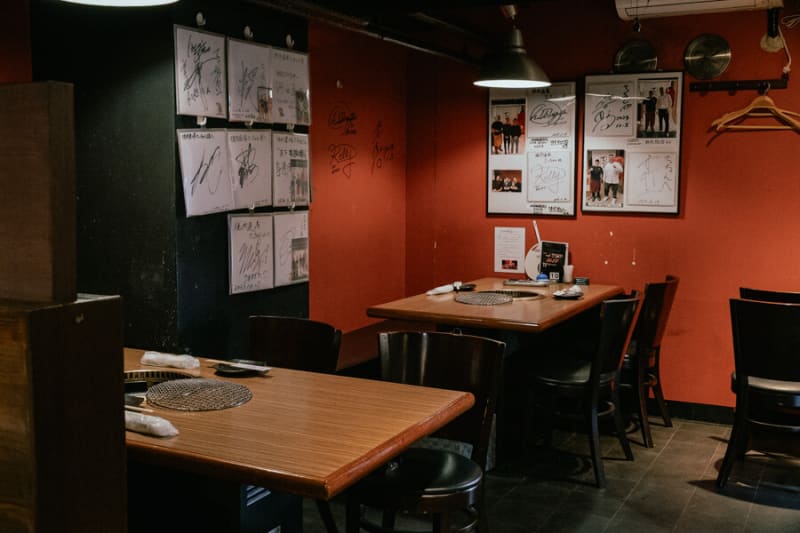
Naoya Inoue. Junto Nakatani. Kai Asakura. UFC and RIZIN fighters. Olympic medalists. World-class athletes who could eat anywhere choose to come here — to a no-frills room in Ninomiya, no private booths, no fancy interior. Just the beef.
The story started in early 2021 when boxing legend Hasegawa Hozumi — himself a three-division world champion — visited after a regular customer made an introduction. He came back four times a week. That's the kind of word-of-mouth that doesn't need a marketing budget.
What Makes the Beef Different

Tetsuji grew up watching his mother run a yakiniku restaurant for 15 years. He spent a decade working in the industry — chain restaurants, store management, Japanese cuisine, even earning a fugu preparation license — before opening Tecchan in November 2020, in the middle of the pandemic, in a space that happened to open up in Ninomiya.
The concept is deliberately unbrandable: no fixed supplier, no Kobe beef certification as a selling point. Instead, Tetsuji sources black wagyu from wherever in Japan is producing the best meat at that moment — Hyogo's Banshu beef (from a farm run by a friend), Kagoshima, Kumamoto, Yamagata, Hokkaido. The cuts change. The charcoal doesn't.
"Hyogo has incredible beef that nobody knows about yet," he says. Banshu beef — raised in Kakogawa, just outside Kobe — is one of his anchors, chosen for flavour over fame.
The house-made sauces are three: a soy-based tare layered with spices and fruit; a citrus-inflected "white tare" built from beef bone stock; and a garlic-sesame salt blend that borders on addictive. The beef rotates. The sauces are constant.
What to order: Thick-cut tan (tongue) and yukke (raw seasoned beef) both sell out early. Come before 7pm if you want them. Harami (skirt steak) is a regular signature.
The vibe: Warm lighting, spacious, comfortable for solo diners or groups. Draft beer ¥280. Feels like a local izakaya that happens to take its beef extremely seriously — because the owner does.
Practical info:
- ⭐ Google rating: 4.6
- 📍 3-2-15 Kotonocho, Chuo Ward, Kobe, Hyogo, Tamaya Mansion 1F — 5-min walk east from JR Sannomiya Station
- Dinner only: Mon–Sat 17:00–22:30, Sun & holidays 17:00–22:00
- Reservations via Tabelog (English available)
Two Different Experiences, Same Idea
Tecchan and Sugitani are different in almost every way — price, format, energy, clientele. But they share something: both were built for people who care about the actual beef, not the brand.
Tourist-facing restaurants in Kobe are excellent. But if you want to eat like someone who lives here, these are the places to start.