- Opening Hours
- 9:00–17:00 / Closed: Mondays (next day if holiday), year-end/New Year
- cost
- Free admission (no pets allowed)
- Suggested Duration
- About 1 hour
- Accessibility
- The path up the mound has slopes. The Goshikizuka Kofun Museum is barrier-free. Dedicated parking available (16 spaces).
Photo Gallery
Goshikizuka Kofun & Museum : Things to See & Do
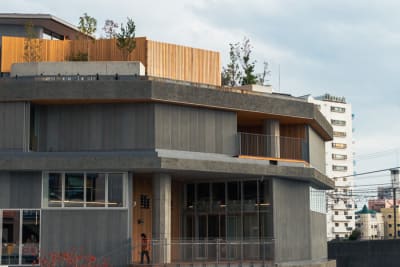
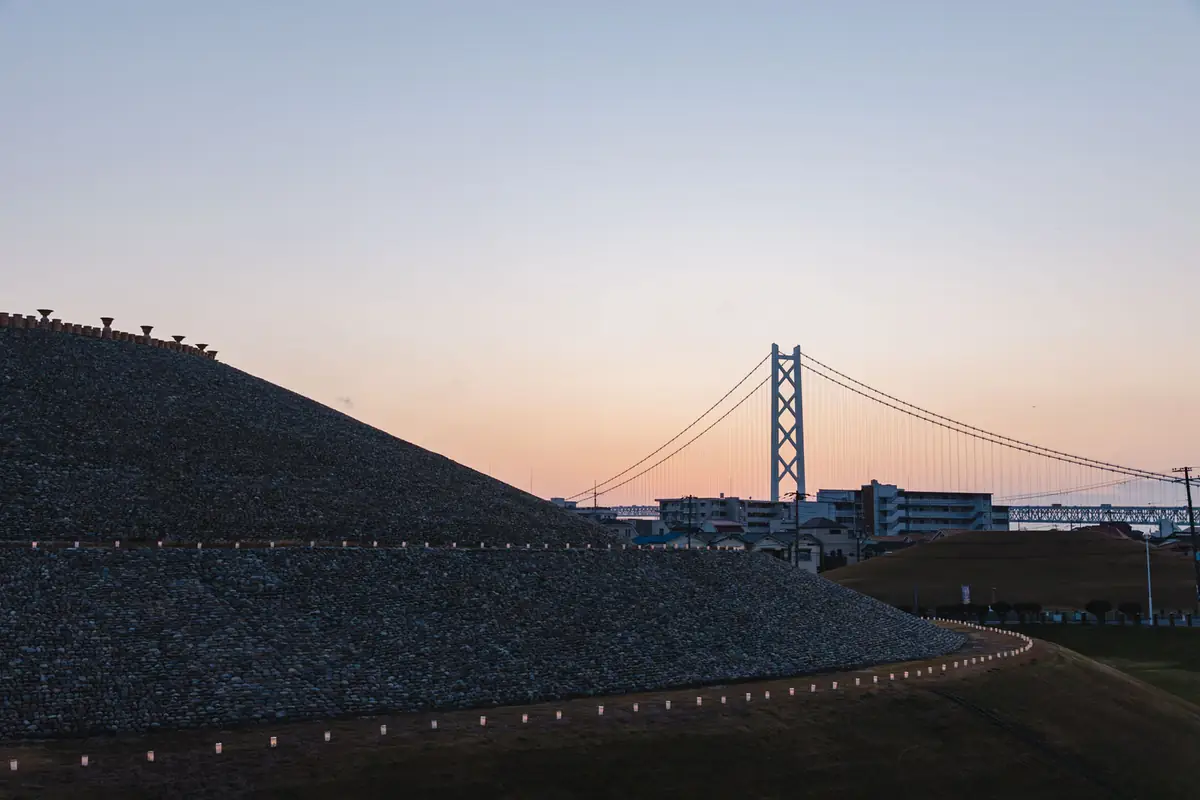
Built at the southern tip of the Tarumi Hills in western Kobe, this — the largest keyhole-shaped burial mound in Hyogo — commands sweeping views of the Akashi Strait below and Awaji Island across the water. The name 'Goshikizuka' has several disputed origins, while 'Sentsubo' is said to derive from the rows of haniwa that once lined the mound. Once protected as a pine forest before the war, the trees were felled during wartime for oil extraction, and the land was later cultivated as farmland in the postwar period. The Sanyo Electric Railway Main Line and JR Kobe Line now run directly in front of the mound, and surrounding roads have altered the original moat. The 194-meter mound was covered with an estimated 2.23 million stones (2,784 tons) from Awaji Island, with some 2,200 haniwa standing in rows. It was the first kofun in Japan to undergo restoration work, carried out over 10 years from 1965. The adjacent Goshikizuka Kofun Museum is scheduled to open in April 2026.
Hyogo's Largest Keyhole Tomb
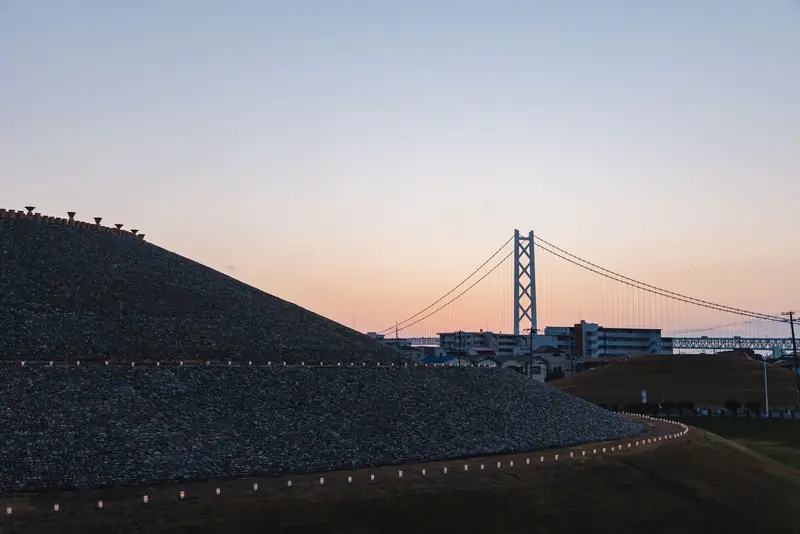
194m long, 18.8m high. Covered with 2.23 million stones transported from Awaji Island
AR Experience Terrace
Hold up a tablet to see the ancient kofun restored to its former glory in AR
Panoramic Akashi Strait View
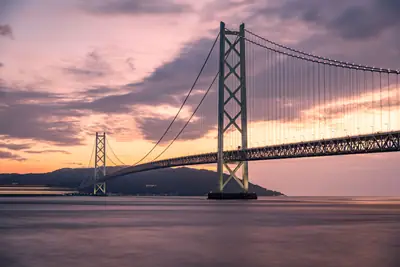
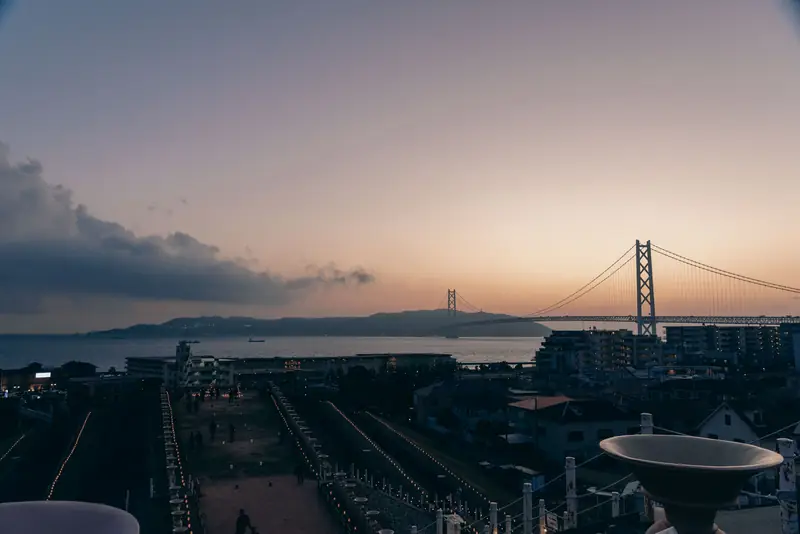
Sweeping views of the Akashi Kaikyo Bridge from the top and observation terrace
Hands-on Exhibits (Museum)
Stone-carrying, stone-laying, haniwa-making and more interactive kofun-building challenges
Candle Night
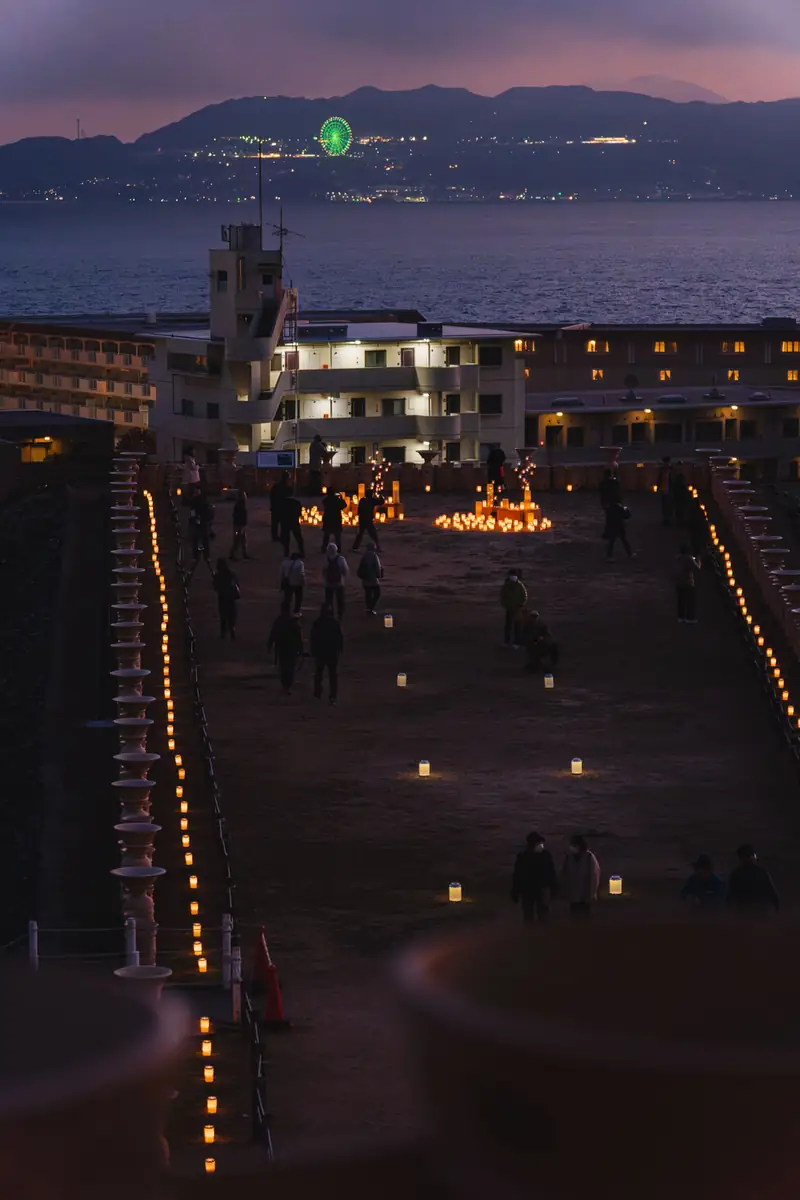
Held irregularly. Candles illuminate the kofun after dark, creating a magical and mystical atmosphere
Stunning Sunset
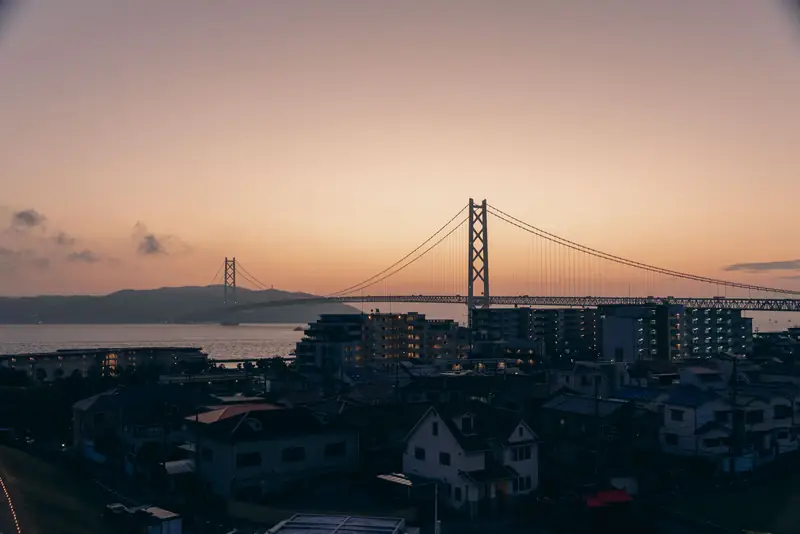
The sunset over the Akashi Kaikyo Bridge is breathtaking — one of Kobe's finest evening views
Goshikizuka Kofun & Museum : Photo Spots & Tips
Best Shots
- — Overview of the keyhole-shaped mound from the hilltop
- — Akashi Kaikyo Bridge from the observation terrace
- — Details of stone-covered terraces with haniwa
- — AR screenshot of the restored ancient kofun
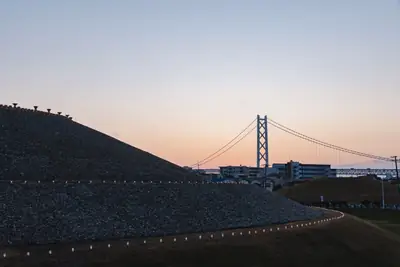
- — Silhouette of the kofun and Akashi Kaikyo Bridge at dusk
- — Magical kofun atmosphere during candle night events
Best Timing
- — Morning (light beautifully hits the stones)
- — Spring (cherry blossoms around the kofun)
- — Evening (stunning sunset behind the Akashi Kaikyo Bridge)
- — Clear days (views reach the Akashi Kaikyo Bridge)
- — During candle night events (irregular schedule — check in advance)
Watch your step when climbing the mound. The stone surface can be slippery when wet, especially after rain.
Access
5-min walk from Kasumigaoka Station (Sanyo Electric Railway). 10-min walk from Tarumi Station (JR/Sanyo). Dedicated parking available (16 spaces).
Frequently Asked Questions
When did the Goshikizuka Kofun Museum open?
Why is it called 'Goshikizuka' (Five Color Mound)?
Is there parking available?
- Opening Hours
- 9:00–17:00 / Closed: Mondays (next day if holiday), year-end/New Year
- cost
- Free admission (no pets allowed)
- Best Time
- Open year-round. Spring brings cherry blossoms, summer offers a vivid blue strait, and autumn frames the kofun with foliage. At sunset, the view of the Akashi Kaikyo Bridge is breathtaking — one of Kobe's finest evening spots. Occasional candle night events transform the ancient mound into a magical nighttime spectacle.
- Suggested Duration
- About 1 hour
- Accessibility
- The path up the mound has slopes. The Goshikizuka Kofun Museum is barrier-free. Dedicated parking available (16 spaces).
![Top 5 Breakfast Spots in Sannomiya & Motomachi, Kobe [2026] — From Stylish Cafes to Japanese Set Meals](https://res.cloudinary.com/deevlog/image/upload/f_auto,q_auto,w_800,c_limit/v1767096226/KOBE%20Brighten/blog/hanikamu-kobe-sannomiya-teishoku/DSC01595_bprqo8.jpg)