Event
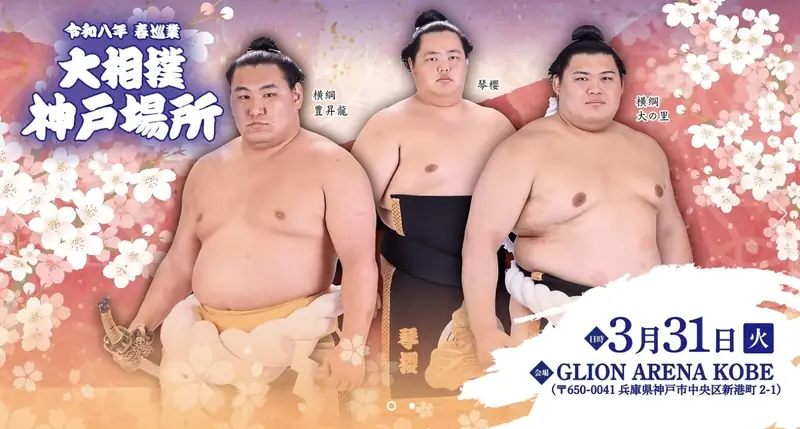
Grand Sumo Spring Tour – Kobe Tournament 2026
日時・場所など詳細はこちら
If you’re in Kobe or Osaka at the end of March and you’ve never seen sumo live, this is the one to catch. On March 31, 2026, Japan’s Grand Sumo Spring Tour makes a single-day stop at GLION ARENA KOBE — right in Kobe’s waterfront district.
This isn’t a tournament in the traditional sense. It’s a regional tour, which means the atmosphere is more relaxed and accessible than the official Tokyo or Osaka honbasho — but the wrestlers, the ceremonies, and the sheer scale of the sport are all there.
What to Expect
Doors open at 9:00 AM with open practice (keiko) on the dohyo. This is the part most visitors don’t realise they can watch — top-division wrestlers training in the ring, up close, before the formal bouts begin. It’s often the highlight for people who came just for the main event.
From around noon, the lower-division matches begin, interspersed with traditional sumo performances: shōkkiri (comic sumo), sumo jinku (sumo folk songs), and the taiko drum ceremony. These are the moments where sumo’s roots as ritual as much as sport become clear.
At 1:30 PM, the energy shifts. The makuuchi (top division) wrestlers enter the ring for the dohyo-iri — the formal ring-entering ceremony, performed in full ceremonial dress. If there’s a yokozuna (grand champion) on tour, this is the moment. The main bouts follow.
By 3:00 PM, the bow-twirling ceremony (yumitori-shiki) closes the day.
Schedule at a glance
| Time | What’s happening |
|---|---|
| 09:00 | Doors open / Open practice |
| 12:00 | Lower division bouts + traditional performances |
| 13:30 | Makuuchi ring-entering ceremony + main bouts |
| 15:00 | Bow-twirling ceremony / Event ends |
Schedule is approximate and subject to change.
Tickets
Klook offers a guided tour package departing from Osaka — English booking, no Japanese required. A great option if you’re based in Osaka and want a hassle-free way to get there.
TICKET
Book online tickets for smooth entry on the day.
This link leads to an external ticket booking site and may contain affiliate links.
If you prefer to book through Japanese ticket platforms, the following are also available (Japanese-language sites):
- Ticket Pia [P Code: 864-403] — Seven-Eleven stores / w.pia.jp/t/sumo-kobe/
- Lawson Ticket [L Code: 59331] — Lawson / Ministop stores / l-tike.com/sports/
- eplus — FamilyMart stores / eplus.jp/sumo-kobe/
Availability update (as of Mar 24): Only 5th-floor seats remain. They’re further from the dohyo, but the sightlines are actually decent. Just know the incline is steep — the higher up you go, the more you’ll feel it.
For the official event page (Japanese): kobe.lme-sumo-jungyo.jp
Getting There
GLION ARENA KOBE is in the waterfront area, a short walk from central Kobe.
From Osaka
- Hankyu or Hanshin from Osaka-Umeda → Kobe-Sannomiya: approx. 30 min
- JR from Osaka → Sannomiya: approx. 20 min
From Kyoto
- Hankyu from Kyoto-Kawaramachi → Kobe-Sannomiya: approx. 55 min
- JR from Kyoto → Sannomiya: approx. 55 min
Sannomiya to the Arena
- Walk from Kobe-Sannomiya (Hankyu/Hanshin): approx. 17–18 min
- Walk from Sannomiya (JR): approx. 20 min
- Port Liner from Sannomiya → Port Terminal Station: approx. 13-minute walk from the station
- Shinki Bus: stops near the arena entrance
No event parking is available. Public transport is strongly recommended.
Before You Go
Do I need to bring slippers?
Can I re-enter the venue?
Is the venue cashless?
While You’re at GLION ARENA KOBE
The sumo wraps up around 3:00 PM — which leaves you with the rest of the afternoon. And it turns out the venue itself has more going on.
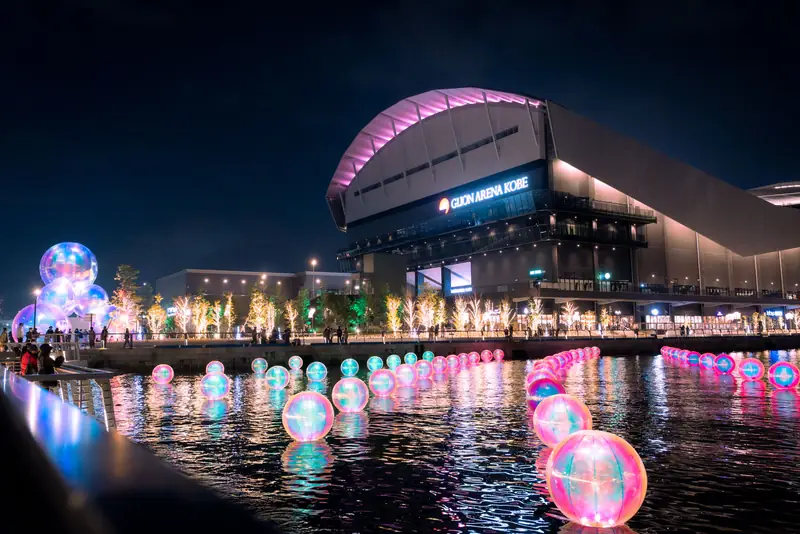
KOBE BUBBLUMI 2026, an immersive art installation by Australian artists Atelier Sisu, is running at the TOTTEI entrance and western waterfront right outside the arena through April 19. During the day it’s a shimmering bubble-art experience; after sunset (until 9:30 PM) the same space transforms with colorful illuminations. Catch the sumo, take a walk along the waterfront, and stay for the light show.
Why Kobe, and Why This Event
Grand Sumo tour events (jungyo) happen in cities across Japan during the months between the major tournaments. They’re smaller and more informal than honbasho, but that’s part of the appeal — you can often get closer to the ring, the atmosphere is friendlier for first-timers, and the wrestlers are more visible before and after matches.
Kobe gets one day. That’s it. If you’re in the Kansai region — whether you’re based in Osaka, Kyoto, or Kobe itself — this is a genuinely rare window to see Grand Sumo without flying to Tokyo.

Upcoming Events